The vagus nerve & nervous system balance
There are moments in life when we realise that functioning well is maybe not only a matter of discipline or mindset, but of how supported we feel from within our own bodies. We live in a time that constantly asks for us to speed up, and to be available yet the quality of our responses depends on something much more fundamental: the state of our nervous system. We would like to invite you to look at the vagus nerve through this lens as a central thread that weaves together the most important areas of our bodies: breath, heart, digestion, perception and emotional balance.
Regulation is the body’s ability to stay in this mode. Throughout the day our nervous system adjusts our heart rate, breath, muscle tone and hormone release according to what it perceives around us.
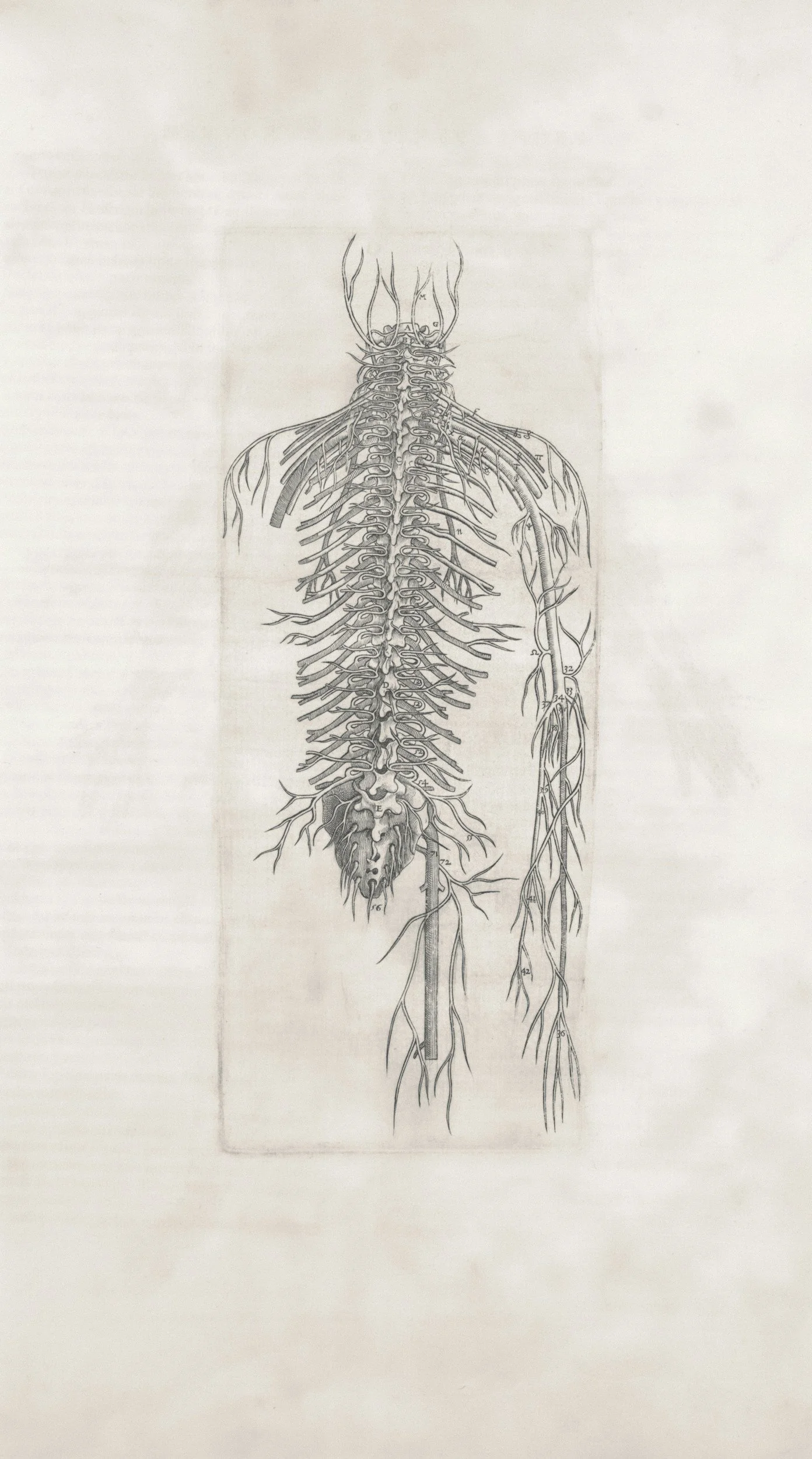
At the centre of this regulatory network is the vagus nerve. It begins in the brainstem, at the base of the skull, and travels down through the neck into the chest and abdomen. Along its path it branches toward our heart, lungs, diaphragm and our digestive organs, and it influences the muscles of our face and throat that shape our expression and our voice. It functions as a two-way communication line, carrying information from the organs back to the brain and from the brain back to the body. Through this continuous exchange the vagus nerve helps us slow the heart, deepen the breath, support digestion and modulate inflammatory responses. In simple terms, it participates in how the body settles and how we regain internal coherence.

When this settling does not occur efficiently, stress chemistry remains active and regains control. Cortisol and adrenaline continue circulating, the heart works harder, breathing becomes shallow, digestion slows and sleep becomes lighter. In the brain, circuits related to threat detection become more dominant, while areas responsible for reflection and perspective are less accessible under prolonged pressure. Over time this affects our mood, clarity, immunity and our cardiovascular system. We become less malleable, more rigid in our reactions, and less able to adapt.
Regulation, however, is not only a physiological adjustment nor only a psychological effort. It is the ongoing dialogue between the two. What we think and perceive influences hormonal release, muscle tone and breath, and at the same time the state of our breath, heart rhythm and muscular tension influences how we interpret situations, how reactive we become to them and how clearly we can think
Nervous system balance is not a one-way street from body to mind. The relationship is circular and continuous. Psychological experience shapes physiology, and physiology shapes perception, emotion and thought. This is well supported in neuroscience and psychophysiology: stress alters hormonal and neural activity, and those biological changes in turn influence attention, interpretation and behaviour. The loop runs in both directions.
This is why working with regulation can begin through the body, even when what we are experiencing feels psychological.
you extend your exhale slightly and stay with that rhythm for a few minutes, you stimulate parasympathetic pathways connected to the vagus nerve and encourage the heart rate to slow. As the heart rhythm steadies, the brain receives signals of safety and mental urgency often decreases.
If you soften the jaw and allow the abdomen to move freely with the breath, muscular tension reduces and the feedback of vigilance to the brain diminishes, often making thought patterns less rigid.
Even a steady, undistracted walk can shift internal chemistry. Rhythm stabilises the nervous system, and as physiology becomes more coherent, perception widens and your responses stay much less reactive.
These practices are simple, yet their effect accumulates through repetition. The aim is not to remove activation from life, because activation is part of being alive. But the aim is to strengthen the capacity to return, recover, and to remain flexible in the midst of whatever we are going through.
When we care for the nervous system, we care for the foundation of our being (how we think, feel and relate). The body is not separate from clarity or discernment; it is the ground that makes them possible. Taking responsibility for our physiology is therefore a caring holistic act. It allows us to function with greater malleability, in presence through a world that is constantly challenging us.
With warmth and kindness,
Leonor